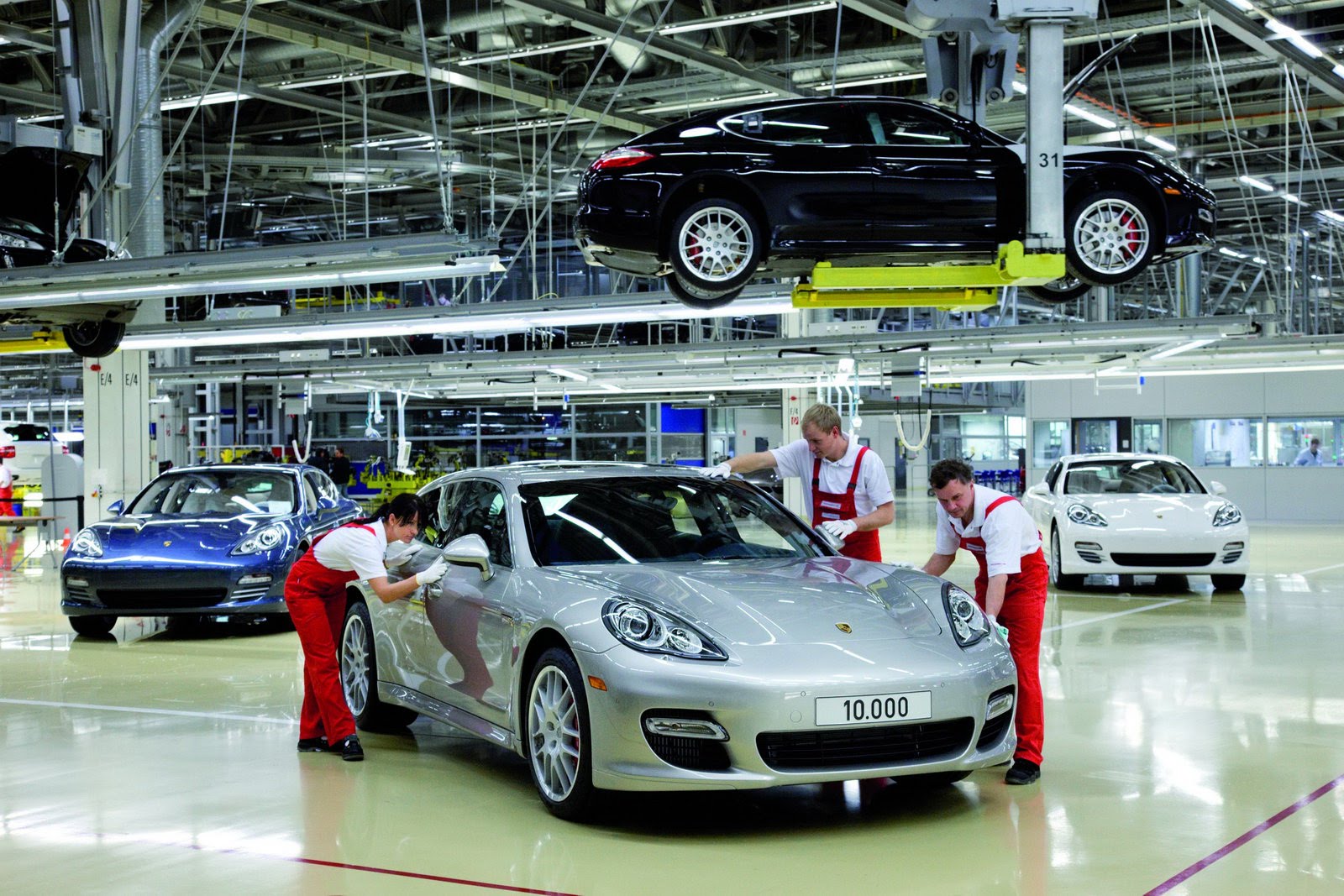
Today, Porsche put an end to the rumors concerning the production location of the Cajun by confirming that the assembly will take place in Leipzig, in the Saxony region of Germany, alongside the Cayenne SUV and Panamera sports sedan model. The facilitate production, Porsche plans to extend the Leipzig factory and turn it into a fully-fledged manufacturing site for the Cajun, including body assembly line and paint shop. Porsche said the decision to build the Cajun will create at least 1,000 new jobs in Leipzig and Stuttgart. The Leipzig plant has been producing the Cayenne SUV since 2002, with Porsche expanding the factory in 2009 to accommodate the Panamera. To date, Porsche has invested around 280 million euro in Leipzig.The Stuttgart-based automaker said the Cajun will come with typical Porsche traits such as “light weight” and “refined handling” adding that the baby SUV model “is expected to pave the way for new, younger customers to enter the world of Porsche”. The new model is expected to be introduced towards the end of 2012. Gallery
Remember a few years ago when every wannabe gangsta was buying those awful “spinner” alloys for their beat up old Chevys and Oldsmobiles? Well, French artist and teacher Thierry Dumaine (who sounds like a character from a historical romance) has taken the concept of the spinner and applied it to an imaginary hydrid he calls the Ventile. It’s all very simple. You know those bicycles that have pedal powered lights? Same principle, though in this case the fans are turned by the circular motion of the wheels and not by being affixed to the wheels themselves.The fans power a generator that helps recharge the Ventile’s batteries. I don’t know how well this would work in the real world, mostly due to the Law of Conservation of Energy, but really who cares. The Ventile is a sweet looking ride; sort of like the result of a 1930’s Ford being reinvented by MINI. There’s also a large underbody fan that is turned by air rushing over the vehicle’s underside; a far more realistic prospect for energy production. It’s not unlike that wind turbine car those two Germans used to cross Australia a few weeks back.Dumaine’s creation was an entrant in the 2011 Michelin’s Challenge Design showcase, an annual exhibition of new automotive design talent on the web. You can check out our gallery below.photos
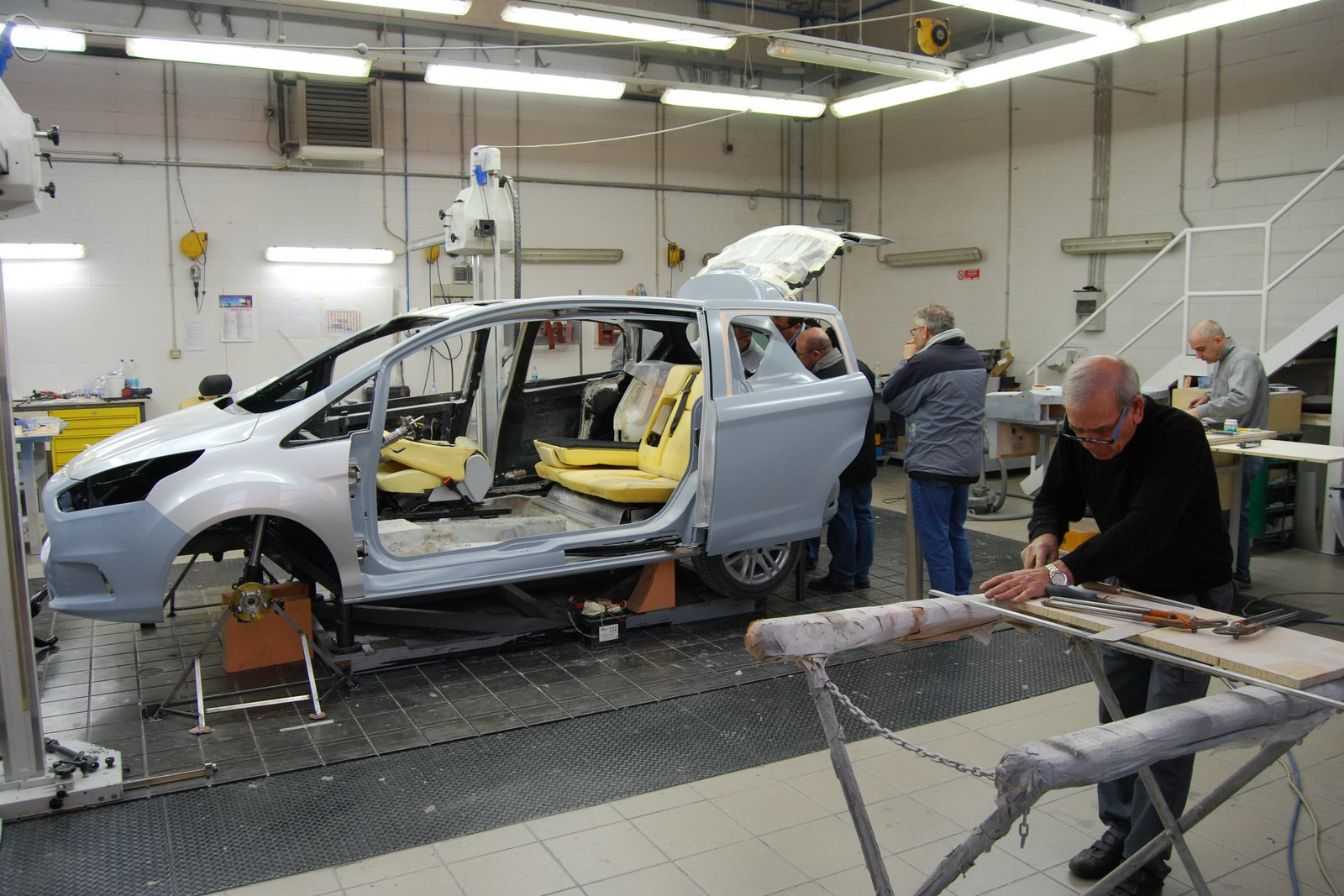
Scheduled to make its world premiere at the Geneva Motor Show this week is Ford's brand-new B-MAX concept that previews the firm's upcoming small MPV, designed to replace the current European Fusion and rival the Opel Meriva. Based on the Fiesta platform, the almost production-ready minivan has some striking features, the most obvious being the new door concept. It has no B-pillar and the twin doors have a conventional opening system in the front and a sliding system in the back.By eliminating the traditional B-pillar, Ford promises best-in-class access to the cabin without compromising safety. With both front and rear doors open, the aperture measures 1.5 metres, around twice the width offered by competitors, according to Ford. “With its unique door format and dynamic design, the B-MAX sends a strong message that customers looking for a compact, stylish and versatile vehicle will soon have an exciting new choice,” said Stephen Odell, CEO of Ford Europe. Another highlight is the lack of door handles, with the opening system being remote-controlled. The B-MAX measures is a little over 4 meters in length, and is 110mm longer than and 110mm taller than the Fiesta five-door hatch, with Ford promising enough room for five passengers. With the rear seats folded 60/40, the car offers a flat load floor that extends up to 2.35 meters in length when the front passenger seat is folded.The B-MAX is powered by an all-new 1.0-liter three-cylinder engine that uses EcoBoost technology and is equipped with Ford's Auto-Start-Stop system. The 3-cylinder unit uses turbocharging, direct fuel injection and twin independent variable cam timing to achieve significant reductions in fuel-consumption and CO2 emissions. This engine is set to replace larger conventional four-cylinder units in the future and is now undergoing the final development phase.A production version of the B-MAX is expected to launch within the next two years.photos
One of the highlights of this year's Geneva Motor Show was the B99 design study for an entry-level Jaguar sedan by Bertone. The concept car was created independently by the Italian design house, without the involvement of Jaguar. Therefore, the B99 does not preview the design of the future X-Type, as confirmed by a top Jaguar executive. “It is not our concept. We appreciate the fact that Jaguar is interesting enough for people to do a concept around. It's not that we are offended by it, or against it - it is just not for us," Adrian Hallmark, Jaguar's global brand director, told Automotive News at the Geneva Motor Show. However, according to Hallmark, a future entry-level Jaguar is in the cards for a 2013 or 2014 launch but the design of the small sedan has not been yet finalized. The B99 is simply a display of Bertone's capability.Jaguar's current design language, as seen on the XF and more recently on the bolder XJ, is modern and has little to do with the past, whereas the B99 Concept is retro from most angles.photos